- The Publisher Newsletter
- Posts
- DC Thomson CEO Rebecca Miskin on the ‘gnarly’ business of transformation
DC Thomson CEO Rebecca Miskin on the ‘gnarly’ business of transformation
Transformation has become business as usual in modern media. However it is not a linear process with the twists and turns of a major change project sometimes feeling like a mix of ‘chess and Russian roulette’.


Media Voices & Peter Houston
December 02, 2025
Welcome to The Publisher Newsletter, by Media Voices: profiling the people and products powering publishing.
DC Thomson CEO Rebecca Miskin on the ‘gnarly’ business of transformation
Transformation has become business as usual in modern media. However it is not a linear process with the twists and turns of a major change project sometimes feeling like a mix of ‘chess and Russian roulette’, according to Rebecca Miskin, CEO at DC Thomson.
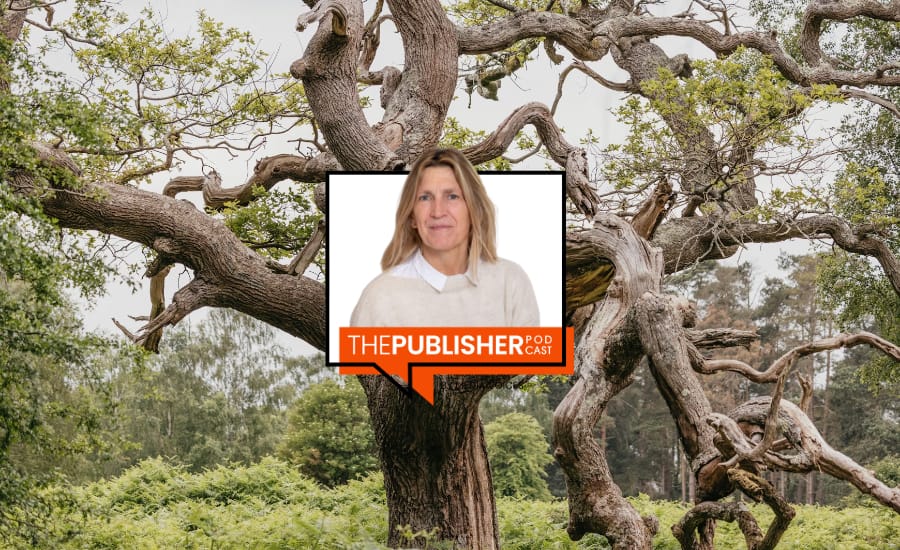
Rebecca Miskin is CEO of the family-owned publisher DC Thomson. Headquartered in Dundee, Scotland, the company has a diverse portfolio spanning B2B titles for the energy sector, regional news, puzzles, and of course, the iconic children’s comic The Beano.
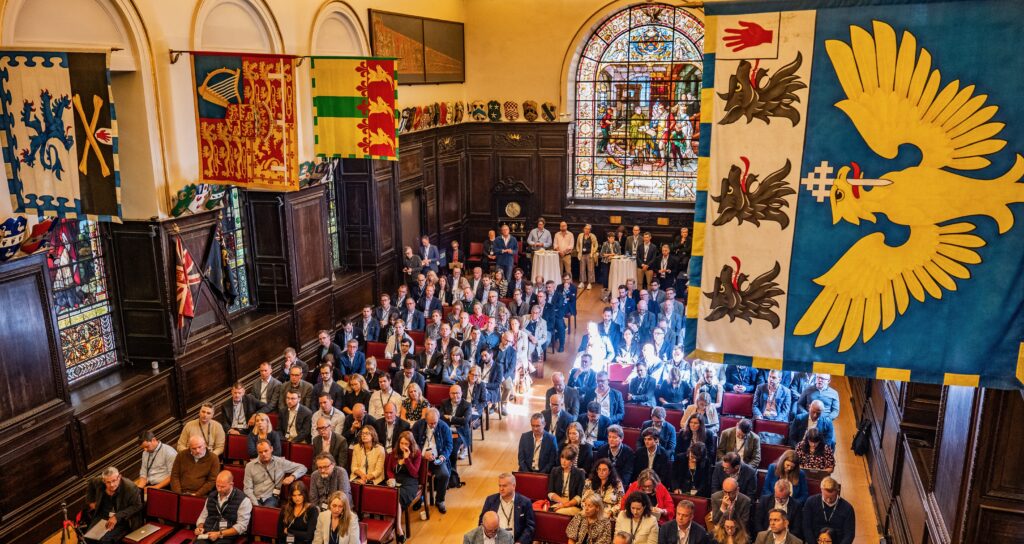
I spoke with Rebecca for The Publisher Podcast at the FIPP Congress in Madrid this October where her presentation was headlined, ‘The Gnarly Reality of Transformation’. More Beano than Boston Consulting Group, Rebecca delivered a story of transformation from the inside, describing the process as ‘fraught with uncertainty’ and ‘messy’.
She believes change is iterative, not linear and ‘gnarly’ perfectly describes the ‘slightly torturous, slightly mischievous’ change process. “I didn’t want to sugarcoat it. It isn’t easy. It isn’t easy for any of my colleagues, it isn’t easy for our customers. It isn’t easy for our shareholders.”
Against that background, I asked Rebecca if there is a secret formula for a successful transformation. “It’s not a secret,” she says. “It’s people. I’m not the success factor here. It is all my colleagues, every single person, from the receptionist through to every leader in the organisation. Everyone has a unique role and they have had to go through the pain of changing everything in their day-to-day.”
Rebecca gives the example of a local journalist who, 10 or 15 years ago, could file a scoop from their own sources. Now, she says, they can’t do everything on their own. “They have to understand what our audiences are wanting. They have to understand how we’re going to amplify this.”
A team sport
She describes a media landscape that has moved from ‘broadcasting’ to ‘narrowcasting’, and from narrowcasting to ‘two-way engagement’. “That’s about listening and people are the cornerstone. It’s a team sport. We’re not looking for the best violinist, we’re looking for the best violinist who wants to be part of an orchestra.”
For Rebecca, transformation is not a single thing. “If you have five people in your team, or 5,000 or 50,000, it is about trying to convince those individuals to make multiple different choices every day. So, it’s millions of decisions; trying to win hearts and minds and move people into doing something where they let go of the stability that they’ve had and embrace something.”
Knowing what success looks like is really helpful. “It helps me, my colleagues, and my shareholders trust the process because there are times when you have no idea if it’s working, and then slowly green shoots emerge.”
Rebecca acknowledges that people naturally ‘cling to stability’, especially in a world where everything from geopolitics to AI can seem terrifying. She thinks the key to navigating the change process is having a North Star that outshines the craving for the familiar. “That needs to be exciting enough for people to want to shift behaviours. The cultural shift is not a dashboard. It’s a living, breathing thing that we’re as good as our weakest link.”
Talent spotting
For Rebecca the excitement comes from seeing talent emerge. “Watching that is incredibly motivating,” she explains. “It’s about those who want to seize the opportunity and those who want to learn new skills and those who fess up and put their hand up when something goes wrong, which means we can all learn from it.”
She is looking for people who start having influence, who are curious and who start doing things. “If we can all create an environment where that type of talent thrives, that is wonderful, because then they start having a ripple effect, and then you’ve got other people starting to change.”
DCT has a diverse portfolio, with each brand acting as ‘connectors’ and ‘advocates’ for its own community, whether that is energy professionals, golfers or genealogists. Every community exhibits its own audience behaviours and DCT explores different transformation paths for each.
Rebecca highlights The Scots Magazine. “That magazine is woven into Scottish heritage, but it continues to look to the future,” she says. “We’re about to launch Gallivant, [a weekly newsletter] for those who love Scotland. It’s long-form journalism about Scotland that’s going to land in your inbox. The fact that it’s from 1739 hasn’t stopped us from looking forwards. It’s not the oldest magazine in the world for nothing.”
While every brand may be on a different transformation path, Rebecca says there’s an infrastructure that remains the same. “We’re not going to get the best talent in the country if we have 16 companies with 16 different tech stacks, where, if someone’s on local, we don’t know what they’re doing in energy in Aberdeen, or someone’s doing puzzles over in Cornwall. There’s a cornerstone of infrastructure and that is where we benefit from data and technology innovation that is built once for reuse.”
Business as usual
Rebecca says transformation is now business as usual, pointing to AI as an example. “AI is going to be business as usual, and we’re only in the foothills; the disruption is going to be huge. The good news is, any company, any team that’s managed disruption well, will be in a great place.”
Noting that AI could bring the same level of change in three years as digital brought over 25, she says: “Tech is changing, which means behaviours will change… and therefore our businesses need to change.”
Rebecca admits to finding the speed of change ‘terrifying’ and describes transformation as a mix of chess and Russian roulette. But, she says, “You control what you can control. You experiment as much as you can. You learn from the experiments, and then you place bold bets.”
One of the bold bets that has worked for DCT is Beano Brain, a consulting agency that helps brands understand children’s behaviours, supporting decision making from child-protection legislation to new product launches. “We have known for decades how kids behave and what makes them laugh, but we wouldn’t have known 10 years ago, five years ago, that that would be a direction of travel for a comic.”
Other examples are the Energy Voice membership community which sprung out of an industry supplement in the Aberdeen Press & Journal and Puzzler Media that has grown from a traditional puzzle magazine business into one of the biggest syndicators of digital puzzle-content in Europe.
“We don’t know what will happen in the next five years, but trust the process,” she emphasised. “Have the right people, create an environment for experimentation and take blame away and know that we’re going to make lots of mistakes.”
That includes Rebecca herself: “I will be very open, put my hand up and say, ‘OK I made a wrong call on that. What can we learn? Why did I make that call? That needs to change in the next decision-making process’. The only failure is not sharing or not fessing up.”
Listen to the full conversation with Rebecca Miskin in this week’s episode of The Publisher Podcast, available wherever you find podcasts.